Tent halls in the UK
What to check before you put up a tent hall in the United Kingdom: permitted development for farm buildings in England, the Building Regulations exemptions for temporary and agricultural buildings, VAT, and imports from Türkiye and the EU. Checked on 5 October 2026 against the sources listed at the end.
Planning permission (England)
- Farms of 5 hectares or more: a building reasonably necessary for agriculture on the unit can be permitted development (GPDO 2015, Schedule 2, Part 6, Class A) within limits: up to 1,500 m² of ground area (1,000 m² for works or structures accommodating livestock), up to 12 m high (3 m within 3 km of an aerodrome), not within 25 m of a trunk or classified road, and livestock buildings not within 400 m of a protected building.
- Before you start, you must apply to the local planning authority for a determination whether its prior approval is needed for the siting, design and external appearance of the building.
- Other uses, such as storage or production halls, generally need planning permission.
- Scotland, Wales and Northern Ireland have their own planning rules.
Building Regulations (England and Wales)
- Temporary buildings that are not intended to remain where they are erected for more than 28 days are exempt (Schedule 2, Class 4).
- Agricultural buildings and buildings mainly for keeping animals are exempt if no part is a dwelling, no point is closer than one and a half times the building's height to a building with sleeping accommodation, and there is a fire exit within 30 m of any point (Class 3). This does not apply if the main use is retailing, packing or exhibiting.
- Other tent halls need Building Regulations approval.
Snow and wind loads
- Loads follow BS EN 1991-1-3 (snow) and BS EN 1991-1-4 (wind) with the UK National Annexes and depend on the location and altitude of the site.
- The manufacturer's structural calculation must use the loads of your exact site; see snow and wind loads.
VAT, customs and delivery
- The standard VAT rate is 20 %. Import VAT is due on imports; VAT-registered businesses can use postponed VAT accounting and declare it on their VAT return.
- From Türkiye: under the UK–Türkiye trade agreement, in effect since 1 January 2021, goods originating in Türkiye can enter at preferential tariff rates, based on a declaration on origin made by the exporter.
- From the EU: customs declarations apply; goods originating in the EU qualify for zero tariffs under the EU–UK Trade and Cooperation Agreement.
- A tent hall travels by truck as a kit; installation by the manufacturer's crew is optional, and the ground must be ready before delivery; see anchoring.
Sources (checked 5 October 2026)
- GPDO 2015, Schedule 2, Part 6, legislation.gov.uk
- Building Regulations 2010, Schedule 2, legislation.gov.uk
- Summary of the UK–Türkiye trade agreement, GOV.UK
- Postponed VAT accounting, GOV.UK
- VAT rates, GOV.UK
This page is general information, not legal or tax advice. Rules change and authorities apply them locally: check with the local planning authority, building control and a structural engineer before you order.
Frequently asked questions
Do farm tent halls need planning permission in England?
+
On units of 5 ha or more, farm buildings within the Part 6 limits are permitted development, but you must first ask the local planning authority whether prior approval is needed. Other cases generally need planning permission.
Are tent halls exempt from Building Regulations?
+
Temporary buildings that stay up to 28 days, and agricultural or animal buildings that meet the distance and fire-exit conditions, are exempt in England and Wales. Others need approval.
Is there duty on a tent hall from Türkiye?
+
Goods originating in Türkiye can use the preferential rates of the UK–Türkiye trade agreement with a declaration on origin. Import VAT of 20 % applies; VAT-registered businesses can account for it on their VAT return.
Further reading
Do tent halls need a building permit?
What authorities usually check and how temporary use is treated.
Wind and snow loads on tent halls
What loads mean for frames, anchoring and safe use.
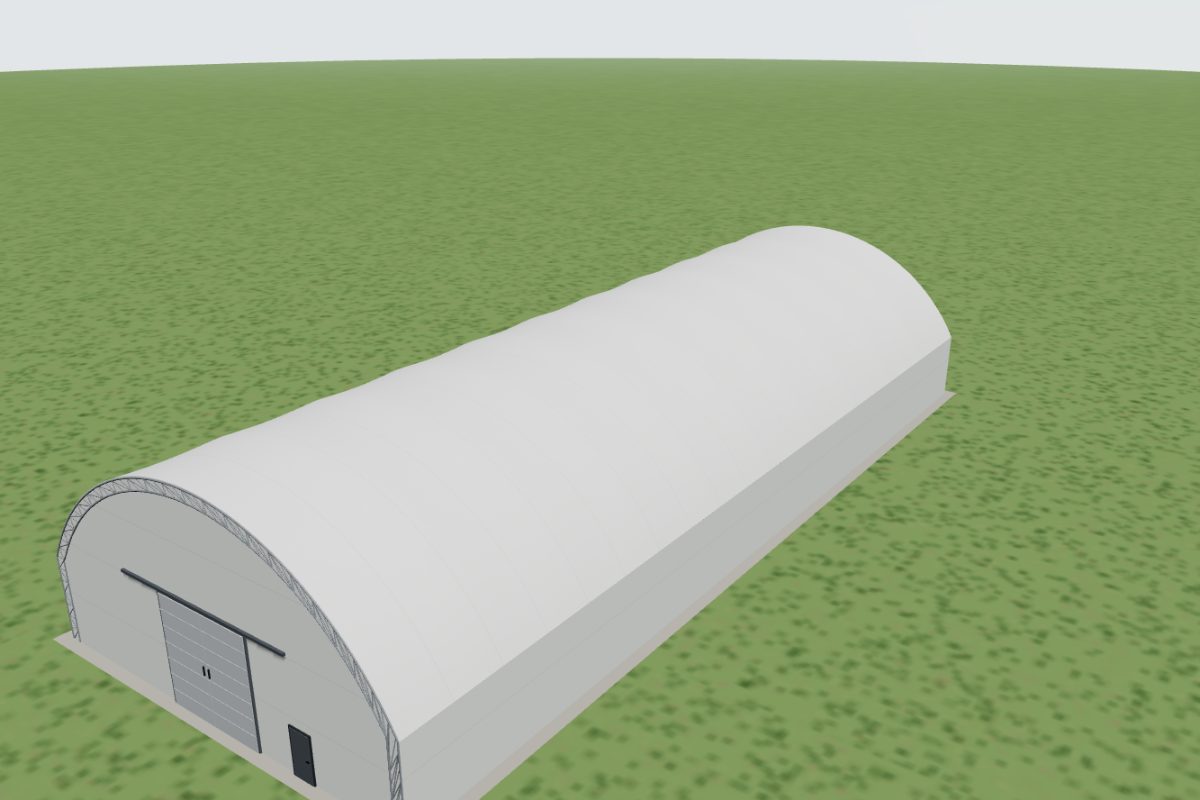
Tent cost calculator
An indicative price range for your tent in seconds.
Price guide
What drives the price of a tent hall, with indicative examples.
Ready to plan your tent?
Design it in 3D in a few minutes, see an estimate and request offers. Free and without registration.