Food storage tents
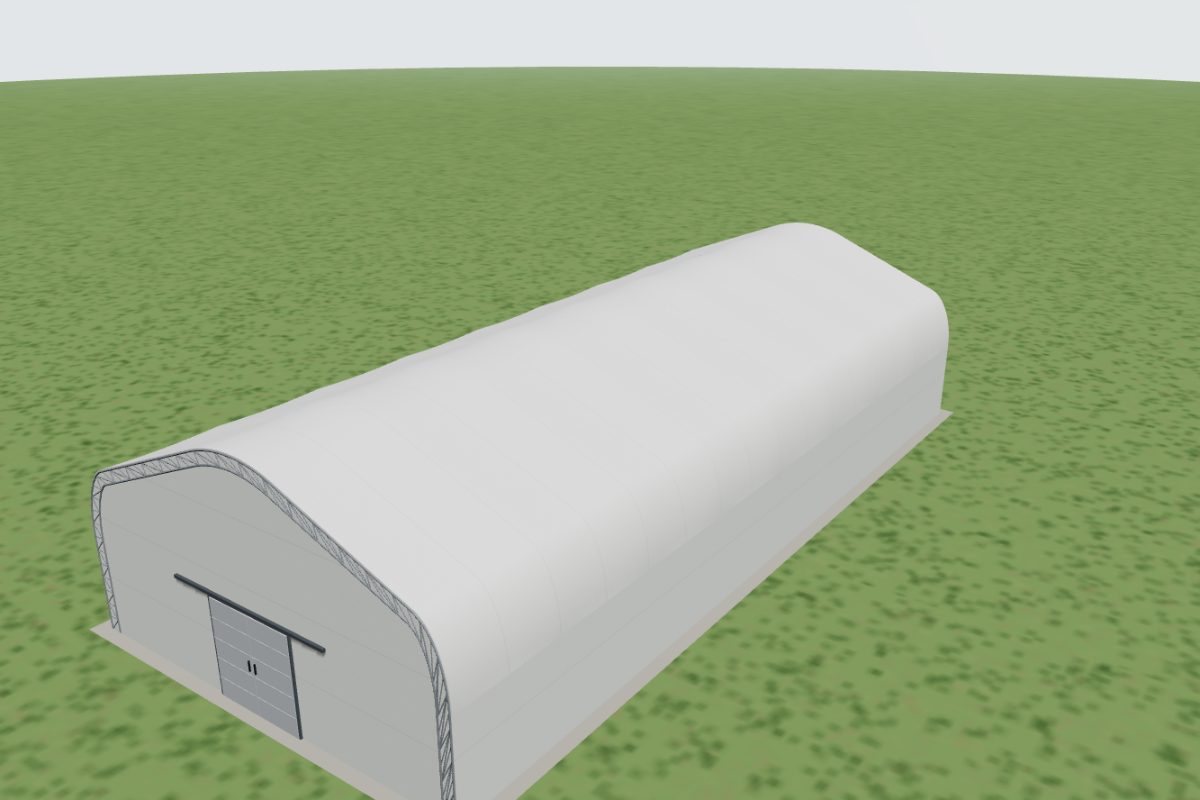
Food storage tents are insulated and ventilated halls for packaged food, drinks and ingredients. Insulation keeps temperatures steadier and reduces condensation; light-coloured covers reflect the sun.
Typical uses
- Packaged food and drinks
- Seasonal stock for food producers
- Distribution and cross-docking
- Packaging materials and ingredients
- Emergency food stores
Example sizes and estimated prices
Indicative estimates for the standard configuration, excluding VAT and installation. Your design can change the price considerably.
| Size | Floor area | Capacity | Estimated price | |
|---|---|---|---|---|
| 12 × 30 m | 360 m² | ≈ 468 pallets | €23,300 – €27,100 | Open in 3D → |
| 18 × 40 m | 720 m² | ≈ 937 pallets | €46,000 – €53,400 | Open in 3D → |
| 25 × 60 m | 1,500 m² | ≈ 1,953 pallets | €98,900 – €115,000 | Open in 3D → |
Planning tips
Insulate and ventilate together
Insulation reduces temperature swings; ventilation removes moisture. Together they prevent condensation on goods.
Check hygiene rules
Food storage is regulated; agree surfaces, floors, pest control and cleaning with your food-safety adviser.
Cold rooms inside
For chilled goods, place insulated cold rooms inside the tent rather than trying to cool the whole hall.
Frequently asked questions
Can a tent be used as a cold store?
+
Not on its own. A tent with insulation keeps temperatures steadier, but chilled or frozen storage needs insulated cold rooms with refrigeration inside the hall.
Which insulation is best for food storage?
+
Thicker insulation (for example glass wool between two membranes) performs best; thinner bubble or felt layers mainly reduce condensation. Compare the options in the planner.
Related
Ready to plan your tent?
Design it in 3D in a few minutes, see an estimate and request offers. Free and without registration.