Temporary buildings: demountable fabric halls
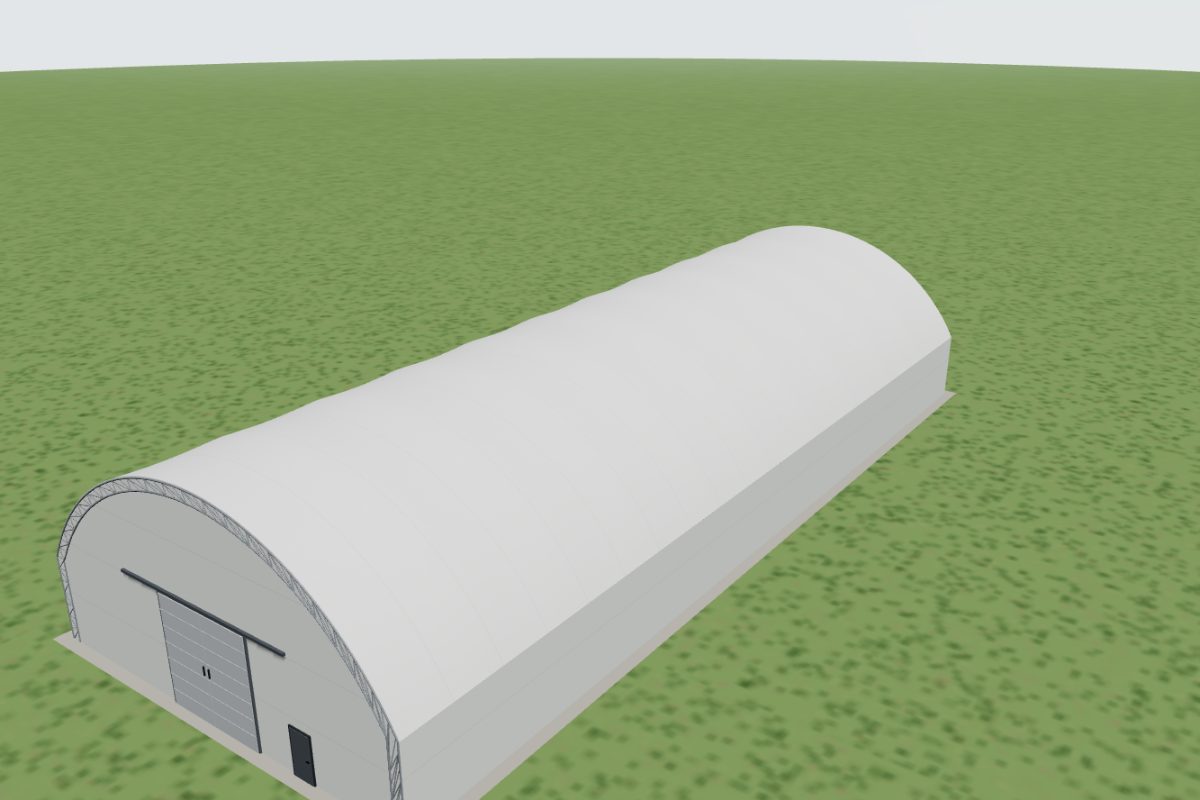
A temporary building is a hall that goes up in weeks and can be taken down, moved or extended later. The most common type has a steel frame and a PVC membrane cover; it is also called a fabric building, a tent hall or a lightweight hall. It is used for storage, production, workshops and site facilities, for a season or for many years.
Typical uses
- Overflow and seasonal storage
- Production, assembly and workshops
- Construction site stores and camps
- Machinery and vehicle shelters
- Farm storage and livestock
- Space during construction or renovation
Example sizes and estimated prices
Indicative estimates for the standard configuration, excluding VAT and installation. Your design can change the price considerably.
| Size | Floor area | Capacity | Estimated price | |
|---|---|---|---|---|
| 15 × 36 m | 540 m² | ≈ 703 pallets | €22,800 – €26,500 | Open in 3D → |
| 20 × 51 m | 1,020 m² | ≈ 1,328 pallets | €43,600 – €50,600 | Open in 3D → |
| 28 × 75 m | 2,100 m² | ≈ 2,734 pallets | €115,000 – €134,000 | Open in 3D → |
What a temporary building is
- Structure: a steel frame bolted together on site, with arches every 4–6 m and spans of up to 30 m without columns.
- Cover: PVC-coated polyester membrane; insulated double covers for heated or cool interiors.
- Base: ground anchors, concrete blocks, a slab or an existing yard; deep foundations are rarely needed (see anchoring).
- Temporary means demountable, not weak: the frame is designed for the snow and wind loads of the site, like a permanent building.
Some temporary buildings are clad with steel sheets or insulated panels instead of a membrane. tent3d plans the membrane version; see tent hall vs steel building and PVC tent vs sandwich panel building for the differences.
What they are used for
- Storage: extra warehouse space for peaks, projects or while you build; see temporary warehouse.
- Production and workshops: assembly, pre-fabrication and packing; see temporary production buildings.
- Construction sites and camps: material stores, canteens and dormitories.
- Farms: machinery, hay and straw and livestock.
Buy or hire?
Hire suits short, known periods; buying pays off over longer use, and the building keeps a resale value. The buy or rent guide compares the costs, and the cost calculator estimates a purchase price for your size. tent3d collects offers to buy from partner manufacturers.
Permits
The rules for temporary buildings differ by country and by how long the building stays. Short-term structures are sometimes exempt or need only a notification; buildings that stay longer usually need a regular permit. Start with do tent halls need a building permit? and the country guides for the United Kingdom, Germany and Poland.
Planning steps
- Work out the floor area: the warehouse space calculator for pallets, the tent size calculator for anything else.
- Check the site: level ground, access for trucks, distances to boundaries and other buildings.
- Design the building in 3D: span, length, side-wall height, doors, insulation and lighting.
- Request offers and agree the base, the permit and the delivery date with the manufacturer.
Frequently asked questions
How long can a temporary building stay?
+
Physically, many years with normal care; see how long a tent hall lasts. Legally, it depends on the permit: short-term structures may be exempt or need only a notification, while long-term use usually needs a regular permit.
Can a temporary building be insulated and heated?
+
Yes. Insulated double membranes and heaters make it usable for workshops, food storage and winter work. Plan insulation and ventilation together to avoid condensation.
How quickly can a temporary building be put up?
+
Standard sizes are often produced and installed within a few weeks, depending on the manufacturer's workload, the transport distance and the site preparation.
Does a temporary building need insurance?
+
Usually yes: insure the building and its contents like any other building. Insurers may ask for the structural calculation and the fire classification of the cover, so keep the manufacturer's documents.
Related
Temporary warehouse
Extra covered storage fast, for peaks, projects or while you build.
Temporary production building
A tent hall as an extra production or assembly area.
Tent hall vs steel building
Cost, speed, insulation and lifespan side by side.
Buy or rent a tent hall?
Work out the break-even point for your project.
Do tent halls need a building permit?
What authorities usually check and how temporary use is treated.
Price guide
What drives the price of a tent hall, with indicative examples.
Ready to plan your tent?
Design it in 3D in a few minutes, see an estimate and request offers. Free and without registration.